

Imagine your company has enough money to pay a supplier, but the money is in its Singapore account and the bill must be paid from New York. If the transfer between those accounts has to wait until Monday, having enough cash overall doesn’t solve the immediate problem.
Businesses work around this by moving money early or keeping extra cash in accounts where they might need it. Both tie up money that could be used elsewhere, and sometimes a company even borrows in one country while its own cash is available in another.
Banks want to make those transfers easier. On Sept. 5, DBS and Citi’s New York office completed a dollar payment between Singapore and the US in minutes, according to DBS’s announcement. To achieve that, they used tokenized deposits, a way of recording bank deposits as digital tokens, through SWIFT’s digital ledger.
The announcement describes the payment route, and the banks still haven’t disclosed the amount or established that every customer can use it. But it gives them a concrete example of the service they want to sell: moving company money across borders when customers need it, including on weekends.
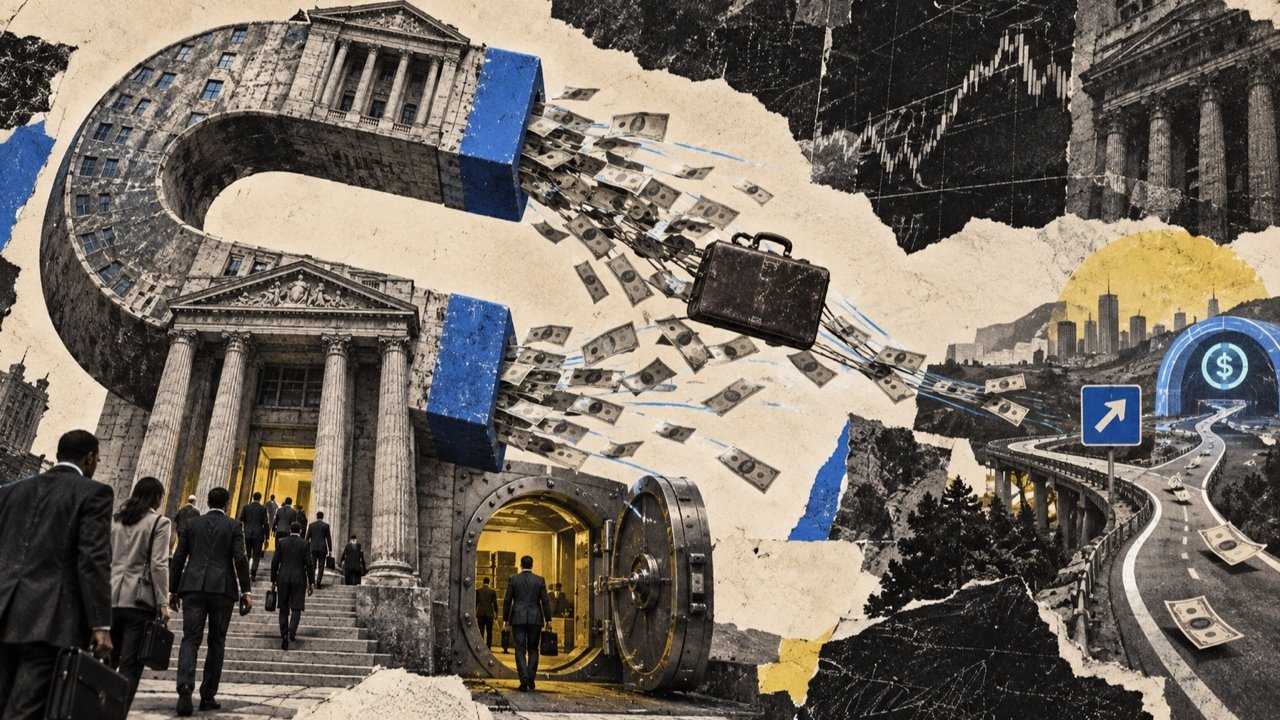
Banks are doing this because it’s potentially a very lucrative deal. Companies that keep their money with a bank pay it to convert currencies and arrange loans. If another provider offers a better way to hold and move that money, banks could lose the fees these companies pay.
That’s also why 21 different financial institutions partnered to establish a stablecoin business. Banks are working on more than one kind of digital money because customers want different ways to pay. In either case, the bank wants to remain the one customers turn to.
Why waiting for Monday gets expensive
Sending money internationally requires several banks to work together, since the sender’s bank may use another bank’s accounts and services to reach the recipient. Each part of the transfer depends on the institutions involved having enough money available and being open to processing it.
Payment instructions travel quickly, but the money takes longer to become available. Settlement is the completion of the financial obligation. Making that step available more often could let companies move money closer to the moment they need to spend it.
Consider a business that puts $10 million in an account two days early because it wants to be certain a payment will go through. Banks call this prefunding. If the company borrows that money at 5% a year, carrying it for those two extra days costs about $2,740 before allowing for any interest the account earns.
Hypothetical exampleAmountMoney moved two days early$10 millionAnnual borrowing rate5%Extra borrowing cost for two daysAbout $2,740
Calculation: $10 million × 5% × 2 ÷ 365. This example describes no actual DBS payment or measured saving. Interest earned on the account balance would reduce the net cost.
Companies using their own cash face a similar decision about what it could earn or pay for elsewhere.
Across many accounts and repeated payments, the extra balances can quickly add up and become extremely expensive. Faster transfers could let them keep less money waiting in each location.
If a company must move cash early into a special account to use the faster network, some of the same cost remains, because the money is waiting, just in a different place.
Instant payments can also require more cash at a particular moment than systems that offset obligations.
Suppose two banks owe each other $10 million and $8 million. Under an arrangement that permits it, they could pay the $2 million difference instead of funding both payments separately. This is called netting, and it can reduce the amount of cash needed to settle what they owe.
So businesses comparing payment services need to look at the full bill, including how much money they must keep available. Speed earns its price by helping businesses use their cash better.
Tokenized deposits become bank dollars
Tokenized deposits maintain a safe and familiar banking relationship for most companies. The bank owes the customer the money in the account, and the token records that obligation in a form the participating payment system can use. The customer’s rights still depend on the bank account and the product’s terms.
Reserve-backed stablecoins work differently. Their issuers hold assets intended to support the tokens’ value and redemption. Dollar tokens can then move between users on supported networks while the backing assets are held elsewhere.
For someone making a payment, both essentially look like dollars moving through an app. The difference is key when they want to know who owes them money and how to get it back.
Form of moneyWho owes the customerWhere it can be usedOrdinary bank depositThe account bankThrough the payment services the bank supportsTokenized bank depositThe bank, under the deposit’s termsWithin the participating system and its supported connectionsReserve-backed stablecoinThe issuer, under the token’s redemption termsThrough compatible wallets and services, subject to restrictions
Deposit insurance, eligibility, and redemption rights depend on the jurisdiction and the particular product.
The BIS comparison of deposits and stablecoins explains another difference. Banks can settle their obligations to one another in central bank money, supporting transfers at face value. Stablecoins traded between holders can trade at market prices that depart from their intended dollar value.
Banks have reasons to offer both. Deposits help fund their businesses, and customers using bank accounts for everyday payments may also buy other services. Stablecoin issuers can earn income on the assets backing their tokens, though running the service and paying partners consume part of that income.
The Sept. 1 announcement by the 21 institutions sets out a planned dollar offering in the first half of 2027. Other G7 currencies are a longer-term ambition, with the euro a priority. Establishing the new company is subject to closing conditions, and the announcement doesn’t disclose how members would divide future income.
These institutions already have customers who trust them with large payments. Those customers have supplied identification and business records and know whom to contact when something goes wrong. Buying another service through that relationship is much easier than starting with a new provider.
Money used to buy stablecoins can also return to banks through the issuer’s reserve accounts. The competition is therefore partly about which institution holds those balances, and partly about which business has the direct relationship with the customer.
Citi is involved in both the tokenized-deposit payment and the separate stablecoin group. That makes sense if companies choose their payment method based on who they need to pay. Some suppliers may prefer bank accounts; others may already accept stablecoins.
Getting there is only half the problem
Existing payment systems already offer some of what banks are promising. The European Central Bank’s TIPS service provides around-the-clock settlement for supported currencies. New token-based services will have to compete on the routes they cover and their total cost.
Cross-border payments also depend on what happens at the receiving end. Dollars can reach someone on Saturday while conversion into their local currency still has to wait. Even when a conversion service is open, its price may be worse than on an ordinary business day.
The same problem applies to separate bank networks. If the recipient’s bank can’t accept the sender’s token, someone has to connect the two systems. Otherwise, customers could end up managing more accounts and moving money between them to complete the payment.
Stablecoins can help where many services already accept the same token, and bank-based services can appeal to businesses that want to keep using familiar accounts. Customers will judge based on whether the money becomes spendable where they need it and whether someone can help when a transfer fails.
For banks, faster digital payments offer a way to keep customers’ money and the recurring business attached to it. Those customers will immediately feel the benefit: fewer occasions when they have enough cash to pay a bill but can’t get it into the right account.
Making that happen reliably, at a competitive price, is what would turn one successful Saturday payment into a service companies use every week.